Starting shaving can feel like a big step when you’re exploring a more female look, especially if you’re new to crossdressing or just experimenting with your style.
The good news is there’s no “right” way to do it
It’s all about comfort, confidence, and what fits your look.
This guide will walk you through practical, beginner-friendly shaving tips to help you get smooth skin safely and avoid the most common mistakes.
Decide what you actually want to shave
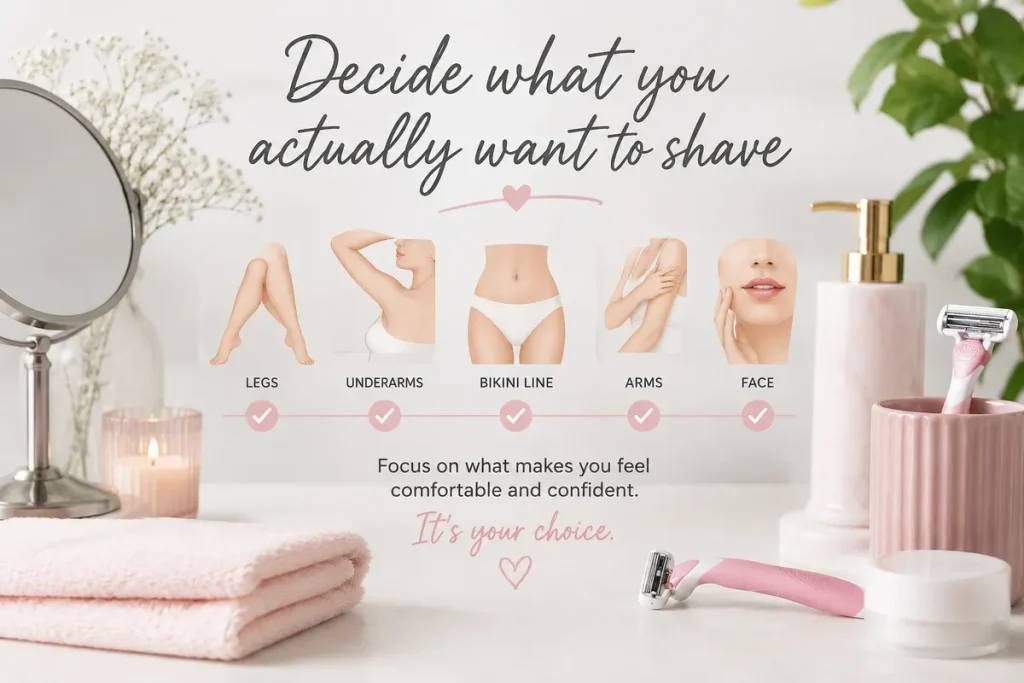
Before you reach for the razor, take a moment to think about what you actually want to shave.
Not every crossdresser wants to remove all of their body hair, and that’s completely okay. There isn’t a “correct” way to present yourself.
Some people only shave their face and chest because those areas are most visible when they’re dressed.
Others prefer smooth legs so they can wear skirts, dresses, or stockings with more confidence.
Some choose to remove hair from their arms, underarms, or back, while others aim for a completely smooth body from head to toe.
It’s also worth thinking about your day-to-day life. If you’re not out as a crossdresser, completely removing body hair might attract questions from family, friends, or colleagues.
In that case, you may decide to shave only the areas that are easy to keep covered or that make the biggest difference to how you feel.
Ultimately, the goal is to shave the areas that help you feel comfortable and confident. Whether that’s just your face or your entire body, the choice is yours.
Choose the Right Razor and Products

The right tools can make a huge difference. A cheap, blunt razor can leave you with cuts, irritation, and uncomfortable stubble.
For beginners, a good-quality multi-blade razor designed for sensitive skin is usually a good starting point.
You may also want:
- A good shaving gel or cream
- A moisturiser
- A gentle exfoliating scrub
- A clean towel
- A mirror for hard-to-see areas
- An after-shave balm designed for sensitive skin
Prepare Your Skin Properly
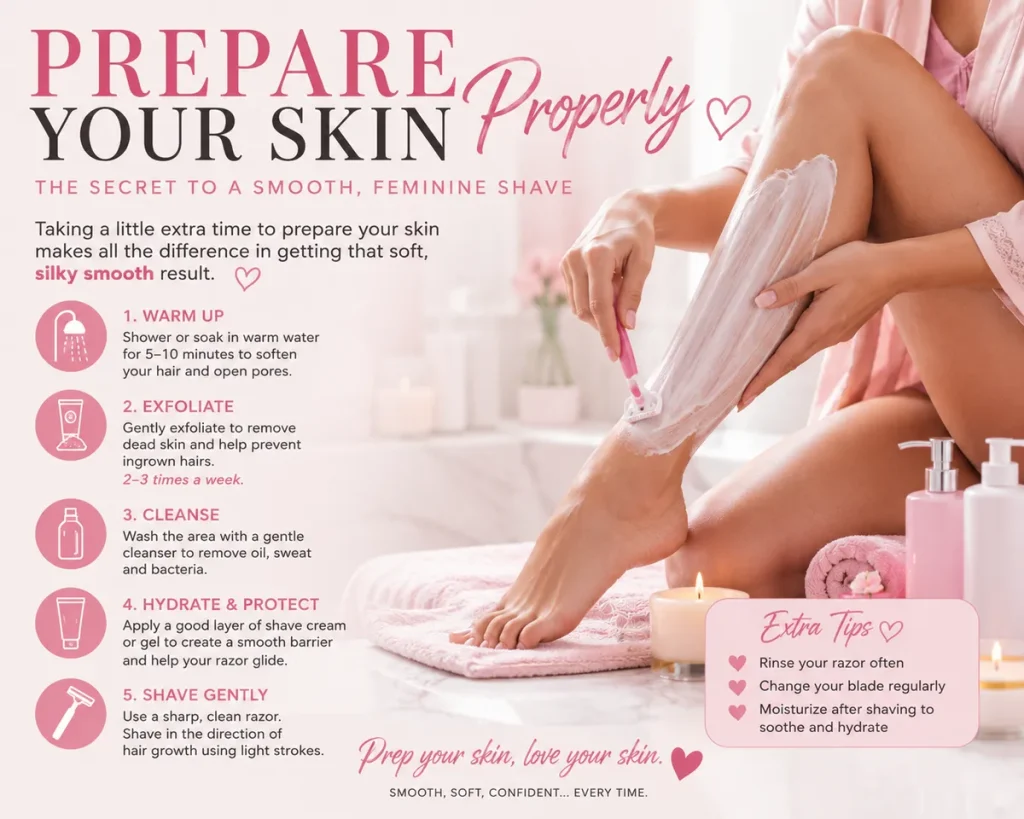
Good preparation is one of the biggest secrets to a smooth shave.
Start with a warm shower or bath. Warm water softens the hair and makes it easier for the razor to glide over your skin.
Before shaving:
- Wash the area you are shaving.
- Gently exfoliate to remove dead skin cells.
- Apply shaving cream or gel and allow it to sit for a minute or two.
Exfoliating can help prevent ingrown hairs, but avoid scrubbing too aggressively, especially if you have sensitive skin.
How to Shave Each Part of Your Body
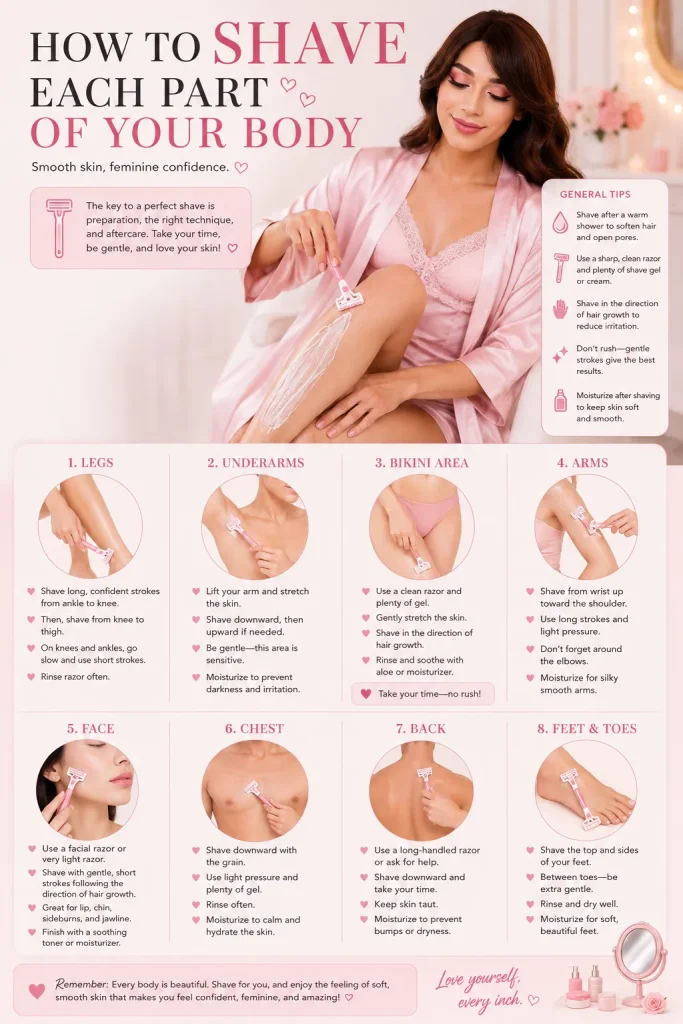
How to Shave Your Face
Facial hair can be one of the biggest challenges for many crossdressers because beard growth is often thicker and more noticeable than body hair.
For a closer shave:
- Shave after a warm shower when the hair is softer.
- Apply plenty of shaving cream.
- Start by shaving in the direction the hair grows.
- Reapply cream before shaving against the grain if your skin allows it.
- Avoid repeatedly going over the same area.
If you experience beard shadow, remember that shaving alone may not completely remove the darker appearance caused by hair beneath the skin.
Makeup techniques such as colour correction can help create a smoother finish.
How to Shave Your Legs
Smooth legs are a popular choice because they can make dresses, skirts, tights, and stockings look very different.
For your first leg shave:
- Trim longer hair first if needed.
- Apply shaving gel generously.
- Shave slowly using long, gentle strokes.
- Pay attention around knees and ankles.
- Rinse your razor regularly.
The knees can be tricky because of their shape, so take your time and avoid pressing too hard.
After shaving, rinse your legs with cool water and apply moisturiser.
How to Shave Your Chest and Body
Body hair varies greatly between people. Some have very little body hair, while others may need more time to achieve a smooth result.
For larger areas:
- Trim long hair before shaving.
- Use plenty of shaving product.
- Work in small sections.
- Do not rush.
Areas with thicker hair may need extra care because shaving too quickly can cause irritation.
How to Avoid Razor Burn and Ingrown Hairs
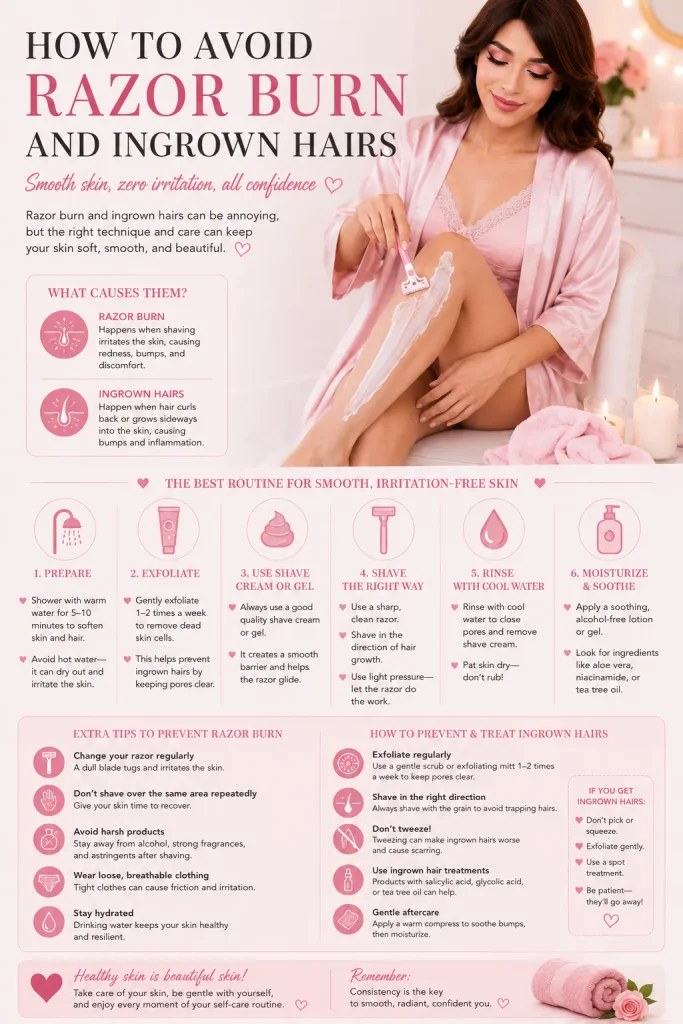
Razor burn and ingrown hairs are two of the most common problems people experience when shaving, especially when removing body hair from larger areas such as the legs, chest, or underarms.
The good news is that a few simple habits can make shaving much more comfortable and leave your skin looking smoother.
Use a Clean, Sharp Razor
A blunt razor can pull at the hair instead of cutting it cleanly, which increases irritation.
Replace disposable blades regularly and always make sure your razor is clean before use.
A fresh blade usually means fewer passes over the same area, reducing stress on your skin.
Don’t Shave Dry Skin
Dry shaving is one of the quickest ways to end up with redness and irritation.
Shave after a warm shower or bath when your hair is softer and your skin is hydrated.
Use a proper shaving gel, cream, or lotion to help the razor glide more easily.
Avoid Pressing Too Hard
Let the razor do the work.
Pressing down harder does not usually give a closer shave it can simply remove more of the top layer of skin and cause irritation.
Use gentle strokes and rinse the blade frequently.
Consider the Direction of Hair Growth
For sensitive areas, shaving in the direction your hair grows can help reduce irritation and the chance of ingrown hairs.
If you want a closer finish, you can carefully shave across or against the grain, but this may increase the risk of bumps, especially on sensitive skin.
Exfoliate Gently
Ingrown hairs happen when a shaved hair grows back into the skin instead of outward.
Gentle exfoliation can help remove dead skin cells and keep hair follicles clear.
Avoid aggressive scrubbing immediately after shaving, as freshly shaved skin can be more sensitive.
Give Your Skin Time to Recover
If you experience frequent razor burn, consider spacing out your shaves or changing your routine.
Some people find that shaving every few days works better than shaving daily, while others prefer a regular routine once their skin adjusts.
Remember that everyone’s skin reacts differently. The aim is not just achieving a completely smooth finish
It is finding a shaving routine that makes you feel comfortable, confident, and happy with your appearance.
Moisturise Afterwards
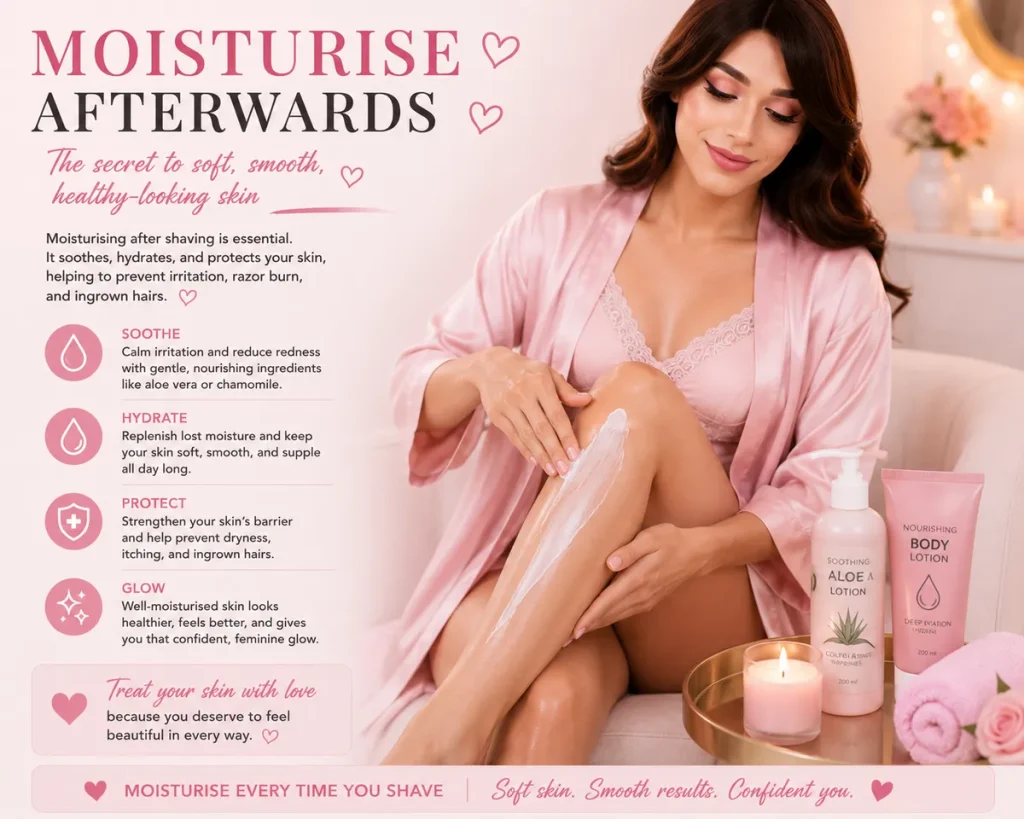
After shaving, apply a gentle moisturiser or fragrance-free body lotion to help calm and protect your skin. Hydrated skin is less likely to become dry, itchy, or irritated.
What If You Can't Shave Everything?
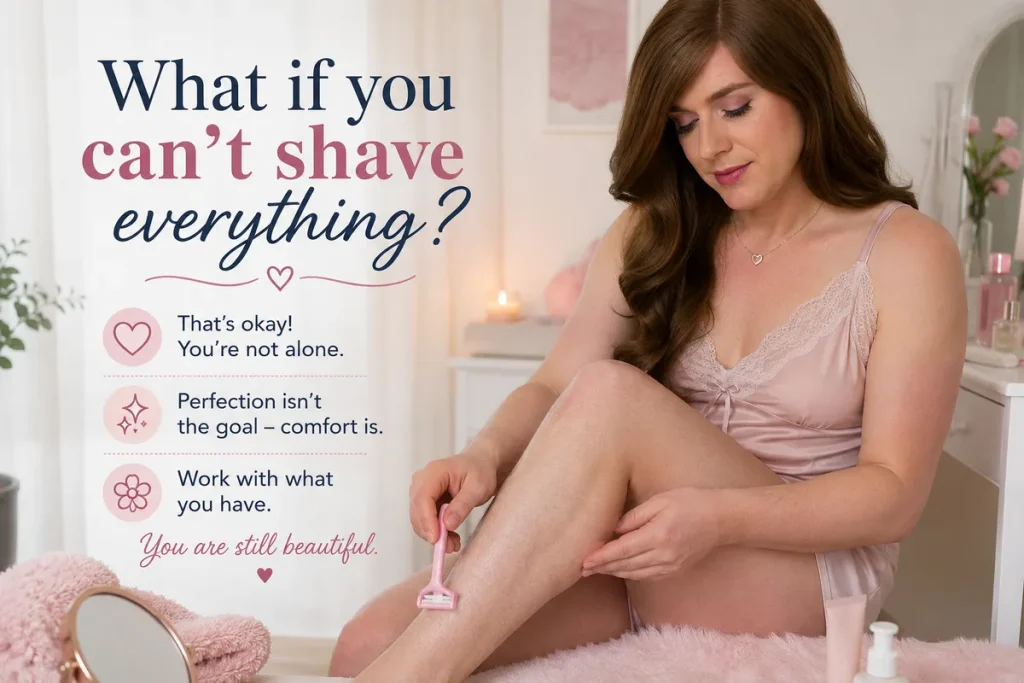
Not every crossdresser is able to, or wants to, remove all of their body hair. That is completely normal. Shaving your entire body can take time, require regular maintenance, and may not always fit with your lifestyle, privacy, or personal preferences.
Some people may live with family, partners, or housemates who are not aware of their crossdressing. Others may have work or social situations where a completely smooth body could attract unwanted questions. In these situations, a more selective approach can still help you achieve the look and confidence you want.
Focus on the Areas That Matter Most
You do not have to remove every hair to create a feminine appearance. Many people choose to focus on areas that have the biggest impact, such as:
Face: A smooth face can make a big difference when applying makeup or creating a softer appearance.
Legs: Smooth legs can complement dresses, skirts, tights, and stockings.
Chest and shoulders: These areas may be more visible with certain outfits.
Hands and arms: Some people prefer a smoother appearance here, while others leave them natural.
Try Trimming Instead of Shaving
If completely removing hair is not practical, trimming can be a good compromise. A shorter, neat appearance can feel more comfortable while being less noticeable than a completely shaved area.
Work With Your Own Body
Everyone has a different body, and there is no single “right” way to crossdress. Some people have naturally less body hair, while others have thicker or faster-growing hair. Clothing choices, makeup, lighting, and confidence all play a role in your overall presentation.
Take Your Time
If full-body shaving is something you want to try, you do not need to do everything at once. Start with one area, see how your skin reacts, and gradually build a routine that works for you.
The most important thing is that your grooming choices are about what makes you feel comfortable and confident. Whether you shave a small area or go completely smooth, there is no requirement to look a certain way to be a crossdresser.
Long-Term Hair Removal Options
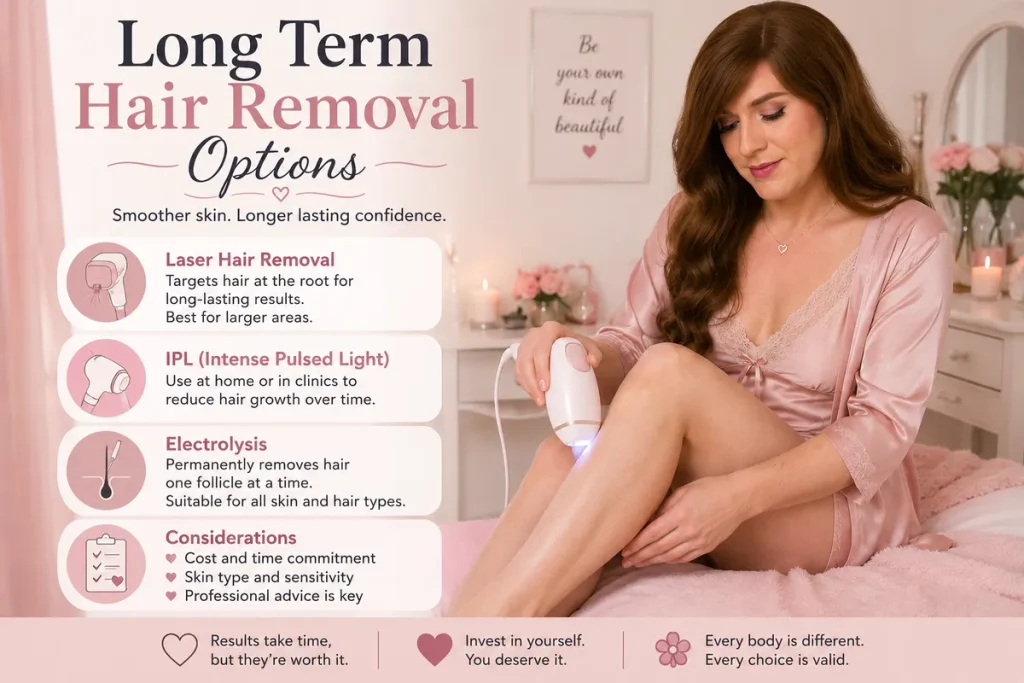
For some crossdressers, shaving is enough to achieve the look they want. For others, the constant routine of shaving, dealing with regrowth, or managing irritation can become frustrating. Long-term hair removal options can reduce the amount of time spent shaving and may help create a smoother appearance with less maintenance.
It is important to remember that there is no requirement to remove body hair permanently. These options are a personal choice and depend on your budget, skin type, hair colour, and how much hair reduction you want.
Laser Hair Removal
Laser hair removal is one of the most popular longer-term options. It works by using concentrated light energy to target the pigment in hair follicles, reducing their ability to produce new hair.
Many people see a significant reduction in hair growth after a course of treatments, although results vary. Laser tends to work best on darker hair because the treatment relies on the contrast between the hair and skin.
Things to consider:
Multiple sessions are usually needed.
Maintenance treatments may be required.
It can be more affordable when treating larger areas compared with some other methods.
Professional advice is important, especially for different skin tones and hair types.
Electrolysis
Electrolysis is a method that treats individual hair follicles using a small electrical current. Unlike laser, it can work on all hair colours because it does not rely on hair pigment.
Advantages include:
It can provide permanent removal of treated hairs.
It works on light, grey, and red hair where laser may be less effective.
The main drawbacks are that it can be time-consuming, as each hair follicle is treated separately, and completing larger areas may require many appointments.
Waxing and Epilating
Waxing and epilators remove hair from the root rather than cutting it at the surface. The results typically last longer than shaving, often for several weeks.
However, they can:
Be uncomfortable, especially at first.
Cause irritation or ingrown hairs for some people.
Require allowing hair to grow to a certain length before treatment.
Professional Advice and Skin Care
Before choosing a long-term hair removal method, consider speaking with a qualified professional who can assess your skin and hair type. Good aftercare is important regardless of the method you choose, as healthy skin will always improve the final result.
Finding What Works for You
Some people prefer the simplicity of shaving, while others enjoy the freedom of reduced hair growth. There is no single best option — the right choice depends on your goals, lifestyle, budget, and how you want to present yourself.
Long-term hair removal is not about meeting a particular standard. It is about choosing a routine that helps you feel comfortable and confident in your own body.
Frequently Asked Questions

Shaving and body hair removal can bring up a lot of questions, especially if you are new to crossdressing or are experimenting with your appearance for the first time. Here are some of the most common questions people ask.
Do I need to shave my entire body to crossdress?
No. There is no requirement to remove any body hair to be a crossdresser. Some people shave their face only, some remove body hair from certain areas, and others prefer a completely smooth look. The choice is entirely personal and depends on what makes you feel comfortable.
Should I shave before or after applying makeup?
In most cases, shaving should come before makeup. A smooth, clean surface can make foundation and other products apply more evenly. After shaving, give your skin some time to calm down and apply moisturiser before putting on makeup.
How often should I shave?
This depends on how quickly your hair grows and how smooth you want to be. Some people shave daily, while others shave every few days or only when they plan to dress. Finding a routine that works for your skin is more important than following a strict schedule.
How can I avoid razor bumps?
Using a sharp, clean razor, shaving with plenty of lubrication, avoiding excessive pressure, exfoliating gently, and moisturising afterwards can all help reduce irritation. If you frequently get bumps, you may need to adjust your technique or try a different hair removal method.
Should I shave my arms and legs?
Many crossdressers choose to shave their legs because they are often visible with dresses, skirts, tights, and stockings. Arms are a more personal choice. Some people prefer a smoother appearance, while others leave their arms natural.
What is the best razor for body shaving?
There is no single best razor for everyone. Some people prefer traditional cartridge razors, while others prefer electric body groomers. The best option depends on your skin sensitivity, budget, and the areas you are shaving.
How do I deal with body hair if I cannot shave regularly?
Trimming can be a good alternative if shaving is not practical. You can also focus on the areas that matter most to you rather than trying to remove everything. Small changes can still make a big difference to how you feel.
Can I get permanent hair removal?
Methods such as laser hair removal and electrolysis can significantly reduce or remove hair, but results vary between individuals. They can be useful options for people who want a lower-maintenance routine.
Is it normal to feel nervous about shaving?
Yes. Many people feel unsure the first time they experiment with changing their appearance. Take your time, learn what works for your skin, and remember that grooming is a personal choice.
What if I do not want to be completely smooth?
That is completely fine. Crossdressing is about expressing yourself, not meeting a fixed appearance standard. Some people enjoy a very smooth look, while others prefer a more natural appearance.
The most important thing is finding a grooming routine that makes you feel confident and comfortable.